


Dental Implants in Canning Vale
A permanent, natural-looking way to replace missing teeth — from consultation through to your new smile.
Dental Implants in Canning Vale
A permanent, natural-looking way to replace missing teeth — from consultation through to your new smile.
A missing tooth can affect a lot more than just your smile — it can knock your confidence, shift your bite out of alignment, and cause neighbouring teeth to drift into the gap over time. Fortunately, dental implants offer a reliable, long-term solution.
At our Canning Vale practice, our dentists assess your mouth, talk through your options and suggest the alternative that fits your smile goals and budget. When an implant is the right path, we refer you to Dentist WA, our sister practice, who carry out the placement itself — so you get our team's judgement on the plan, and a trusted, familiar practice for the procedure.
What are dental implants?
An implant is a two-part system: a biocompatible artificial "root," and a "tooth" anchored on top of it. Once placed into the jawbone, the implant fuses permanently through a process called osseointegration — mimicking the anatomy of a natural tooth root and helping to preserve the surrounding bone, which would otherwise shrink after tooth loss.
Choosing an implant offers a number of advantages:


- Biocompatible materials the body readily accepts
- Durable enough to support a wide range of restorations
- Suitable for replacing one tooth or several
- The highest success rate and life expectancy of modern tooth replacement options
- Easy to maintain — brush and floss as normal
- Doesn't rely on or alter neighbouring teeth, unlike a bridge
- Preserves your natural tooth spacing and bite alignment
Types of Dental Implants
There are three common types of dental implants that are available, all of which are dependent on your individual needs and the existing health of your remaining teeth and gums.
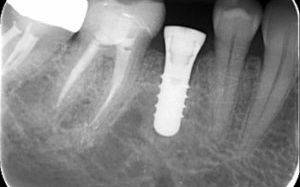
Single and multiple implants — a titanium screw inserted directly into the jawbone, replacing an individual missing tooth root. Once fused with the bone, a crown matching your natural teeth is placed on top. Full treatment typically takes 4–9 months depending on any preparatory work needed.
Implant-supported bridges — recommended when several teeth in a row are missing or failing. Implants are placed into the jawbone, and once fused, a bridge is anchored across them. This usually takes 4–5 months, or 6–8 months if a bone graft is needed first.
Implant-retained dentures — for patients with few natural teeth left but enough bone to support implants. A denture clips onto implants via a bar, offering more stability than a standard removable denture while still being removable for cleaning or sleeping. Treatment typically takes 4–7 months.
How the process works with us


Recovery
Placement itself typically takes 30 minutes to a few hours, depending on complexity. Some swelling, bruising or mild discomfort afterwards is normal and manageable with over-the-counter pain relief; Dentist WA will usually prescribe antibiotics beforehand to guard against infection.
The bone and gums fully heal over the following months as osseointegration completes — timing depends on the type of implant. Once healed, your final crown, bridge or denture is fitted, completing the restoration.
Any surgical or invasive procedure carries risks. Before proceeding, you should seek a second opinion from an appropriately qualified health practitioner.

Why choose implants over dentures or bridges
Losing a tooth causes ongoing bone loss in the jaw, which can eventually make the face look sunken.
Traditional dentures and bridges sit on top of the gum and jawbone without attaching to it — implants, by contrast, integrate directly into the bone and stimulate new bone growth, which is why they're often preferred, particularly where teeth are weak or there's been previous gum or bone disease.
Frequently asked questions
Cost varies depending on how many implants you need, the type required, and materials used. We'll talk through your options at your consultation, and Dentist WA will confirm exact costs as part of your referral.
You shouldn't feel pain during placement, as anaesthetic is used throughout. Some tenderness in the days after is normal and manageable with over-the-counter pain relief.
Yes, dental implants are usually a good option for your oral health. Speak to your dentist about whether they would be suitable for you.
As with natural teeth, it's important to properly care for your dental implants to avoid issues. That means thoroughly brushing your teeth and rinsing out your mouth to remove debris and plaque. You'll also want to continue getting regular dental check-ups. If you neglect your dental hygiene after you've received dental implants, plaque and gum infections can occur because they're bonded with the jawbone and gum tissues.
With proper care and regular check-ups, implants are built to last a lifetime, though the crown on top may need replacing after 10–15 years of wear.
Generally, children and teens are too young, as their jawbones are still developing. Smokers, those with poor oral hygiene, and some older patients may face a higher risk of complications — your dentist will advise whether implants are right for you.
Each procedure takes anywhere from 30 minutes to 2-3 hours, depending on what’s needed.
As with any minor surgery, there's some risk of infection, sinus issues, injury or nerve damage, though these are uncommon. We'll talk through anything specific to your case before you proceed.
Ready to Fill the Gap in Your Smile?
Book a consultation with our Canning Vale team!
We'll assess your case and, if an implant is the right fit, connect you directly with Dentist WA to get started.
